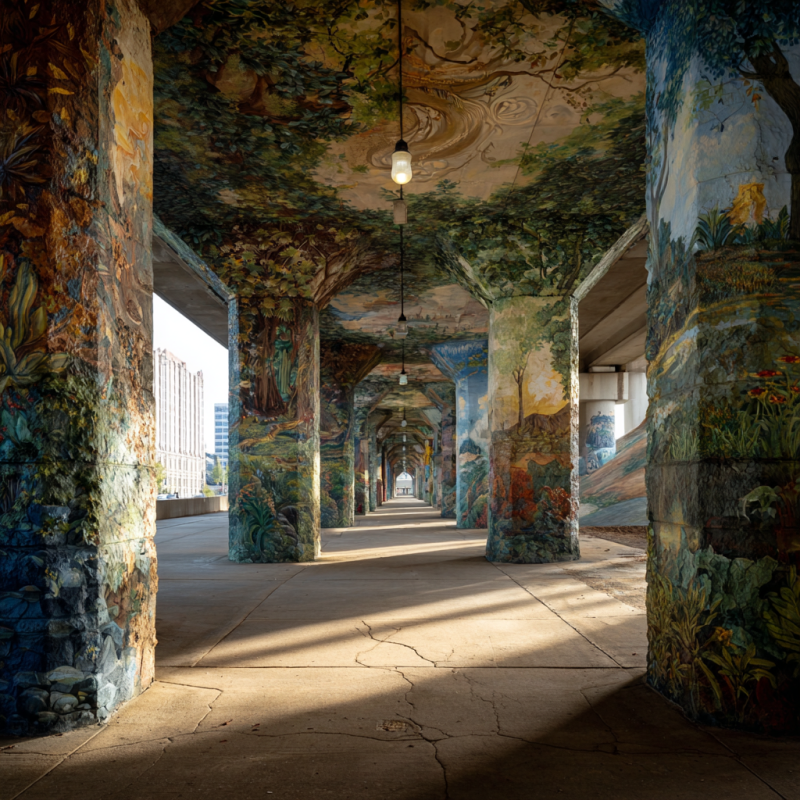
The Alleyways and Street Art That Speak
Start your exploration not at the main streets, but in the alleys. Yeah, alleys. At first glance, they look like shortcuts or places you’d avoid at night. But in Des Moines, they’re alive. Graffiti isn’t just spray paint — it’s a conversation. One alley near the East Village has a mural that changes almost every month. You’ll see everything from local bands painted in psychedelic colors to social statements that make you pause.
There’s an energy in these spaces, like someone whispered a secret and you just happened to walk by. I remember stopping in one alley, leaning against a brick wall that smelled faintly of coffee and wet concrete, watching a small group of local painters setting up their easel. They nodded at me, said hello, and went back to their work. No gallery, no tickets, just pure art in motion.
Cafés That Feel Like Homeibfvd-21c5ea-8449e1
The heart of Des Moines’ hidden corners isn’t just in walls — it’s in its cafés. And I don’t mean Starbucks. I mean the tiny, independently-run spots where baristas know your name before you order, and there’s a bookshelf with more novels than sugar packets.
One of my favorites is a place tucked behind a row of office buildings downtown. You’d never notice it unless you walked past the unassuming door with a faded sign. Inside, the scent of freshly ground coffee mixes with vinyl records playing old jazz. I spent an entire afternoon there just watching the morning light shift across the cracked tile floor. People came in and out, most regulars, some first-timers like me, and everyone felt like part of a quiet ritual.
The menu is simple — strong coffee, a few pastries, maybe a sandwich. But it’s not the menu that matters; it’s the atmosphere. If you sit long enough, you start noticing the small things: the way a barista stirs her coffee in perfect circles, the soft laughter between two old friends at a corner table, the tiny doodles left in the tips jar.
Unexpected Spots Around the City
Des Moines isn’t huge, but it has these little pockets that feel like worlds of their own. Near the riverfront, there’s a cluster of small workshops where artisans craft everything from handmade leather goods to experimental ceramics. They’re usually open only a few hours a week, and the best way to find them is by wandering and asking locals.
I stumbled upon one shop almost by accident — a tiny woodshop run by a guy named Leo, who has been shaping furniture and small sculptures for decades. He invited me in, showed me a half-finished coffee table, and shared stories about how Des Moines has changed over the years. It’s not on any map, and I probably would’ve walked past it a hundred times if I weren’t curious.
Nighttime in the East Village
nqwcw-6ba175-82fc22
During the day, Des Moines’ hidden corners have a sleepy charm. At night, some areas, especially the East Village, take on a different character. Streetlights glow soft and golden, and small bars or live music spots hum quietly without the overwhelming crowds you’d find in bigger cities.
One night, I wandered down a cobblestone street lined with small venues and stumbled into a tiny jazz club. No neon sign outside — just a door with a brass plaque. Inside, a trio played the kind of music that feels like it’s been waiting for you all day, and the audience was maybe a dozen people, but everyone was riveted. I had a beer, scribbled some notes in my journal, and just listened.
That’s the thing about these hidden corners: they reward patience. You can’t just drive by and expect to see them. You need to walk, look up, peek around corners, and sometimes, just be willing to get a little lost.
People Who Make the City Alive
bjjjz-9976f2-476292
Hidden corners aren’t just about places — they’re about people. I met skateboarders practicing tricks on empty sidewalks at dawn, artists painting murals on walls that most of the city ignores, and baristas who talk to every single customer like they’ve been friends for years.
There’s an intimacy in these spaces, like the city is letting you in. You start noticing rhythms: the morning deliveries, the conversations in cafés, the way streetlights flicker on at dusk. And it makes you feel connected, even if only for a few hours.
Tips for Exploring Des Moines Off the Map
If you want to find these hidden corners yourself, here are a few things I learned:
Walk. Don’t drive. The small streets, alleys, and hidden spots are easiest to find on foot.
Follow street art. Murals often lead to small shops, workshops, or cafés.
Talk to locals. Ask people where they go to unwind, get coffee, or just watch the city move. You’ll get recommendations no guidebook mentions.
Be patient. Some places open only certain hours, and some are visible only if you take the right turn at the right time.
Bring a camera and a notebook. Even small discoveries feel like stories worth capturing.
Final Thoughts
Des Moines’ hidden corners aren’t about ticking off attractions. They’re about slowing down, noticing the little details, and letting the city reveal itself in quiet, unexpected ways. There’s a mural behind an old laundromat that will make you stop and think. There’s a café tucked behind a bank where the smell of coffee and vinyl makes you feel like you’ve stepped into a different decade. There’s a woodshop where stories are carved into every piece of furniture.
emcto-1cc7f9-a36642
If you want to experience Des Moines like a local, skip the obvious and look for the corners people overlook. Walk slowly. Ask questions. Listen. Pay attention to the small streets, the quiet cafés, the subtle art on walls, and the people who make the city feel alive.
That’s the magic of hidden corners — they’re not advertised, they’re not perfect, but they’re unforgettable. And in a city like Des Moines, they’re everywhere if you just take the time to notice.