The Workshop as a Window to the City
A workshop is more than a place to work. It’s a lens through which you can see the soul of a town. I wandered into a small carpentry studio tucked behind a warehouse on the outskirts of Ames. The space was filled with sunlight streaming through high windows, illuminating sawdust floating like tiny stars in the air. Wooden planks leaned against walls, half-finished furniture sat on the floor, and hand tools lined every surface.
The maker, Leo, greeted me with a nod and a smile. He had been crafting furniture in this space for decades, and each piece told a story — some about the town’s history, others about his family. Watching him work, I realized that every town has a rhythm, and the Makers are the ones keeping it alive. Their work is slow, deliberate, and full of care, and it’s impossible not to feel a little of that magic when you step inside.
Bakers, Brewers, and Small Culinary Artists
The Makers aren’t limited to workshops. Food is craft, too. I visited a tiny bakery in Des Moines run by a woman named Clara, whose bread smelled like toasted memories. She started baking in her kitchen, experimenting with sourdough and rye, until she outgrew her small apartment. Her bakery is now a local haven, filled with the warmth of ovens, the chatter of neighbors, and the smell of fresh pastries.
It’s easy to overlook places like this when you’re rushing through a city, but the Makers are what give a town flavor — literally and figuratively. They infuse their work with personality, care, and a sense of community. You can taste it in a loaf of bread, smell it in the coffee, or see it in the delicate details of a handcrafted dish.
Artists Transforming Space
Graffiti, murals, and street art often go unnoticed by passersby. But in the hands of Makers, these forms of art transform neighborhoods. Walking through an industrial district, I noticed a mural that stretched the length of an old brick wall. Bright colors, abstract shapes, and small hidden symbols rewarded careful observation.
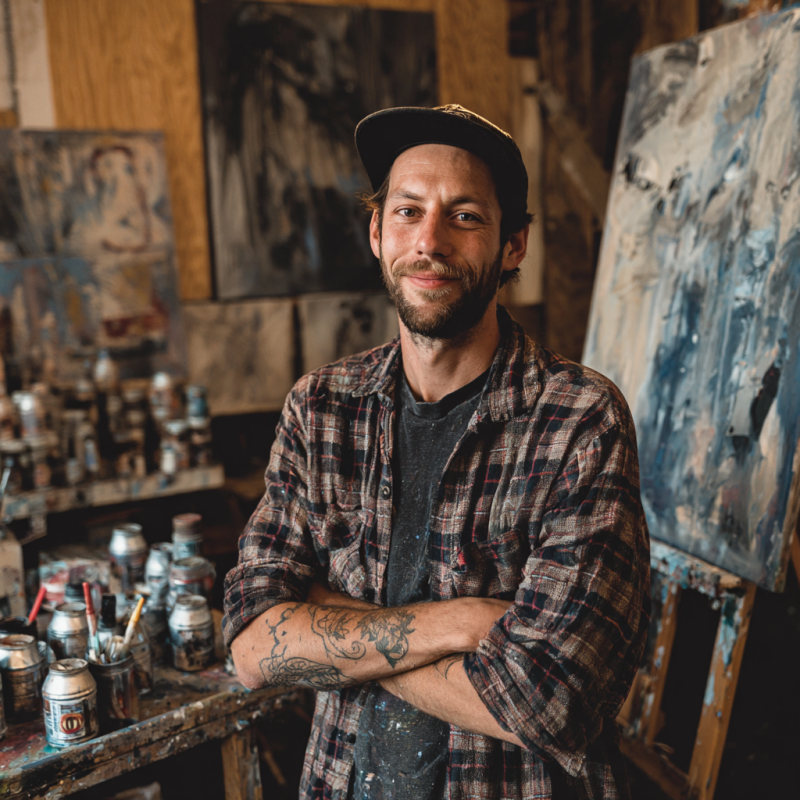
The artist, Sam, worked out of a tiny studio above a former garage. He invited me in to see sketches, paints, and half-finished canvases. “People walk past without noticing,” he said, “but I like the idea that they’re seeing something, even if they don’t know it.” Makers like Sam shape cities quietly. Their work is public, but their process is intimate, almost secret.
Tattooists, Metalworkers, and Unlikely Crafts
Makers appear in unexpected places. I visited a tattoo studio in a quiet part of town where the walls were covered in sketches, some decades old. The tattooist, Alex, treated each design like a story waiting to be told. Each client left not just with ink, but with a personal narrative etched onto their skin.
Nearby, a small metalworking shop hummed with the rhythm of grinders and welders. The artisan, Maria, created everything from custom furniture to sculptural installations. Watching her bend and shape metal felt almost like watching a dancer — precise, controlled, yet creative and expressive. These Makers transform raw materials into objects imbued with life and meaning.
The People Behind the Scenes
Meeting Makers is like meeting the heartbeat of a city. They’re often unassuming, working in quiet spaces, but their impact is everywhere. They shape the objects we touch, the food we eat, the art we see, and even the spaces we inhabit.
I met a skateboard maker who crafted custom boards in a garage behind a small industrial street. The boards were colorful, unique, and perfectly balanced. He explained how each board reflected the rider’s personality — and in a way, it reflected the city itself: practical, creative, and quietly rebellious.
Exploring the Makers’ World
If you want to discover a city’s hidden character, seek out the Makers. They aren’t always in guidebooks. You have to wander, ask locals, peek into alleyways, and sometimes take a leap of curiosity. Start with:
Workshops and studios. Look for small doors, high windows, or hints of activity behind industrial areas.
Local cafés and bakeries. Many Makers showcase their work here or share stories over coffee.
Markets and pop-ups. Weekend markets often feature independent craftspeople and small food artisans.
Street art trails. Murals often mark neighborhoods rich in creative energy.
Conversations. The best way to discover Makers is to talk to locals. Their recommendations lead to hidden treasures.
Why Makers Matter
Makers are the backbone of any city’s cultural identity. They transform ordinary spaces into lively hubs, mundane objects into art, and simple ingredients into experiences.
hylqn-3001b6-07ec6f
Walking through a workshop, bakery, or studio is more than sightseeing. It’s witnessing someone’s dedication, creativity, and love for what they do. It’s a chance to connect with the city on a human level. These are the stories, textures, and lives that often go unnoticed, but they make a place unforgettable.
A Reflection on Community
Visiting Makers also reminds you that a city isn’t just its skyline or monuments — it’s the people who keep it alive. They create, they inspire, and they build connections between strangers and neighborhoods. Watching them work, listening to their stories, and seeing the results of their craft brings a sense of intimacy to a city that guidebooks rarely capture.
Even if you never return to the same workshop, bakery, or studio, the memory lingers — a brushstroke here, the smell of bread there, the sound of a grinder or hammer echoing in a quiet alley. These experiences shape your understanding of the city in ways a photograph never could.
If you want to explore a city beyond the obvious, look for the Makers. They are the people who breathe life into streets, cafés, workshops, and homes. They are bakers, tattooists, metalworkers, painters, skateboard makers, and everyone in between — each leaving their mark on the world in subtle but profound ways.
Discovering their spaces, listening to their stories, and observing their craft is a travel experience unlike any other. It’s intimate, raw, inspiring, and real. And it’s the hidden heart of every city waiting for curious travelers who are willing to slow down and notice.