The Ghosts of Coffee
Walking past an empty café is like glimpsing a city’s shadow. The tables are gone, the windows streaked with dust, but the energy remains — faint laughter, the quiet tap of a barista’s spoon, the smell of cinnamon buns long since eaten.
In Des Moines, there’s a small brick storefront near the river that once served coffee for decades. Locals remember it as a hub for artists, students, and writers. “You could sit there for hours, and it felt like the whole city was humming around you,” one former regular told me. Today, the space houses a boutique, but if you listen closely, you can almost hear the echo of the old espresso machine.
Why Cafés Disappear
Cafés vanish for many reasons. Rising rents, shifting neighborhoods, corporate chains, and the fickleness of taste all play a role. Sometimes it’s a family that owned a place for generations, finally retiring. Other times, it’s a neighborhood changing too quickly for small businesses to keep up.
And yet, each closure leaves a mark. People carry the memory forward, recounting it to friends, leaving traces in blog posts, old photographs, and Instagram shots that survive long after the café itself is gone. In a way, these lost cafés continue to exist — not as physical spaces, but as shared cultural memory.
Stories from the Midwest
Take Cedar Rapids, where a small café once lined a quiet street. It was known for its hand-painted signs and mismatched chairs. Students came for cheap coffee, artists for inspiration, and neighbors for gossip. A regular, an elderly man named George, once told me, “You could spend a day in there and feel like you’d seen the whole town.” The café closed five years ago, but George still visits the corner, looking at the new tenant and remembering the smell of roasted beans.
Or consider a small diner-café hybrid in Ames, tucked between a laundromat and a hardware store. It was famous for pies baked daily, the kind that made people drive miles just for a slice. The building is still there, but the counter is empty, the ovens cold, and the laughter gone. Yet every Sunday morning, someone drives by, hoping to catch a glimpse of the magic that once lived there.
uwnni-3f3683-ad0050
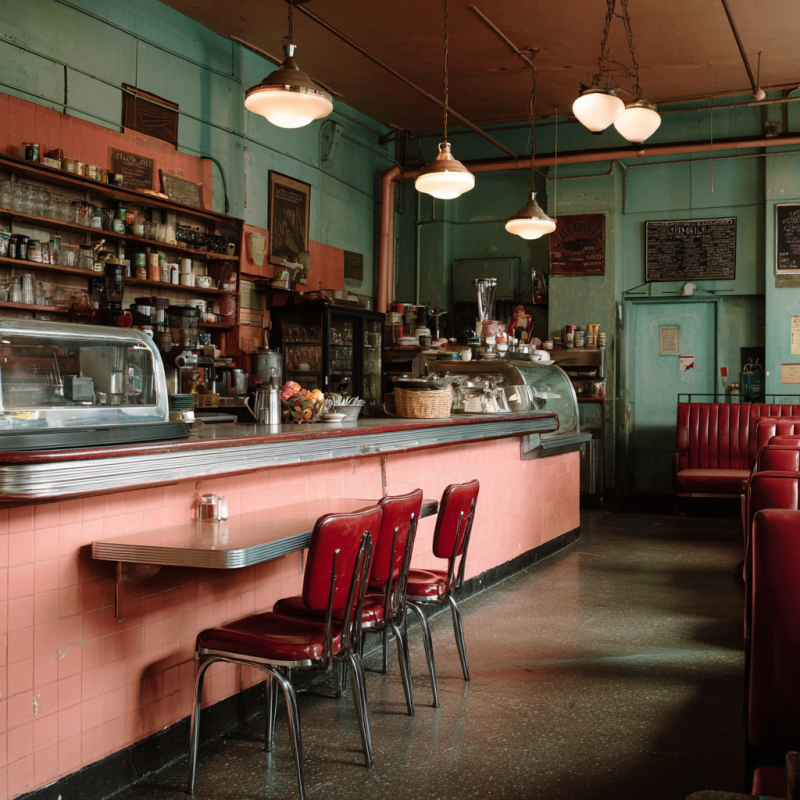
Architecture, Décor, and MemoryLost cafés aren’t just remembered for their coffee; they’re remembered for their character. Worn wooden counters, cracked tiles, hand-painted menus, sticky tables — imperfections that make a place feel real, human, alive.
I love photographing these remnants. The faded paint on a door, a chipped sign, or a forgotten chair can tell a story as vividly as any anecdote. There’s a beauty in decay, in spaces that once mattered and now exist only as memory and image.
Hidden Gems You Can Still Find
Some cafés aren’t entirely lost. In smaller towns, a few continue quietly, overlooked by travelers. These places have survived by adapting while staying true to their roots. Micro-roasters, community hubs, and cafés run by passionate locals preserve the spirit of the Midwest’s coffee culture.
I stumbled upon one in a tiny Iowa town, hidden behind a laundromat. The interior was chaotic but charming, with mismatched mugs and hand-written menus. The owner, a woman named Clara, joked about never having time to clean the floors properly but insisted the coffee made up for it. It’s exactly this kind of place that reminds me of cafés we’ve lost — warm, human, slightly imperfect, and full of stories.
Why These Lost Cafés Matter
Lost cafés tell the story of communities. They’re the spaces where friendships are forged, artists are inspired, students cram for exams, and locals gather to talk about life. Their disappearance is more than a business closing; it’s a shift in the cultural landscape, a small but tangible loss.
Visiting their corners, photographing the empty spaces, or talking to former patrons helps preserve their legacy. And even as cities evolve, these memories shape how we experience urban life, inspiring curiosity and nostalgia in equal measure.
Tips for Exploring Lost Cafés
symld-b35ad1-bba2c1
If you’re interested in tracing the stories of lost cafés:
Talk to locals. Residents often remember cafés that aren’t documented anywhere.
Walk side streets. Many cafés were tucked away, overlooked by the casual passerby.
Look for visual cues. Faded signs, old benches, and architectural quirks often mark where cafés once stood.
Photograph and document. Capture textures, light, and details — they tell stories that words alone cannot.
Pair with nearby attractions. Lost cafés often sit in interesting neighborhoods with street art, murals, or small shops.
A Reflection on Time and Community
What fascinates me most about lost cafés is their persistence in memory. They outlive their physical form. Even decades later, people talk about them, sketch them, photograph them, and pass stories to the next generation. It’s a reminder that spaces matter not just for what they are, but for how they make people feel.
And for travelers, this is an invitation to notice the small, overlooked corners of towns and cities — places that may seem ordinary or empty but are full of history, community, and memory.
djzih-c5673b-7f14ea
frwpj-3374a7-94d892
The Lost Cafés of the Midwest are more than just empty chairs and faded signs. They’re echoes of a community’s heartbeat, snapshots of human connection, and reminders that even when spaces disappear, their stories linger.
Seek out remnants, listen to local tales, photograph the forgotten corners, and let the memory of these cafés guide you through cities and towns with new eyes. Because in every abandoned storefront or quiet street, there’s a story waiting to be discovered — and every lost café has one worth hearing.